One of the most common questions we hear during a site visit is "how many cameras do I actually need?" There's no single answer — it depends on the size of your property, the number of entry points, and what you actually want to keep an eye on. Here's how we work it out during a free site inspection.
For a typical home, coverage usually starts with the main gate, front door, and any side or rear entrances. Apartments and shops often need fewer cameras than expected if they're placed correctly — a single well-positioned camera at a choke point can cover more ground than two poorly placed ones.
The right number of cameras is the number that removes your blind spots — not the maximum your budget allows.
For larger properties — warehouses, offices, schools and hospitals — we look at the layout in zones: entry and exit points, parking areas, cash counters, storage areas, and any spots with poor natural visibility. Each zone gets evaluated for whether it needs dedicated coverage or can be seen from a neighbouring camera's angle.

Lighting also plays a role in camera count and type. Poorly lit areas may need cameras with better low-light performance or IR range rather than simply adding more units. This is one of the reasons we always recommend a physical site visit over a phone estimate — photos and floor plans only tell part of the story.
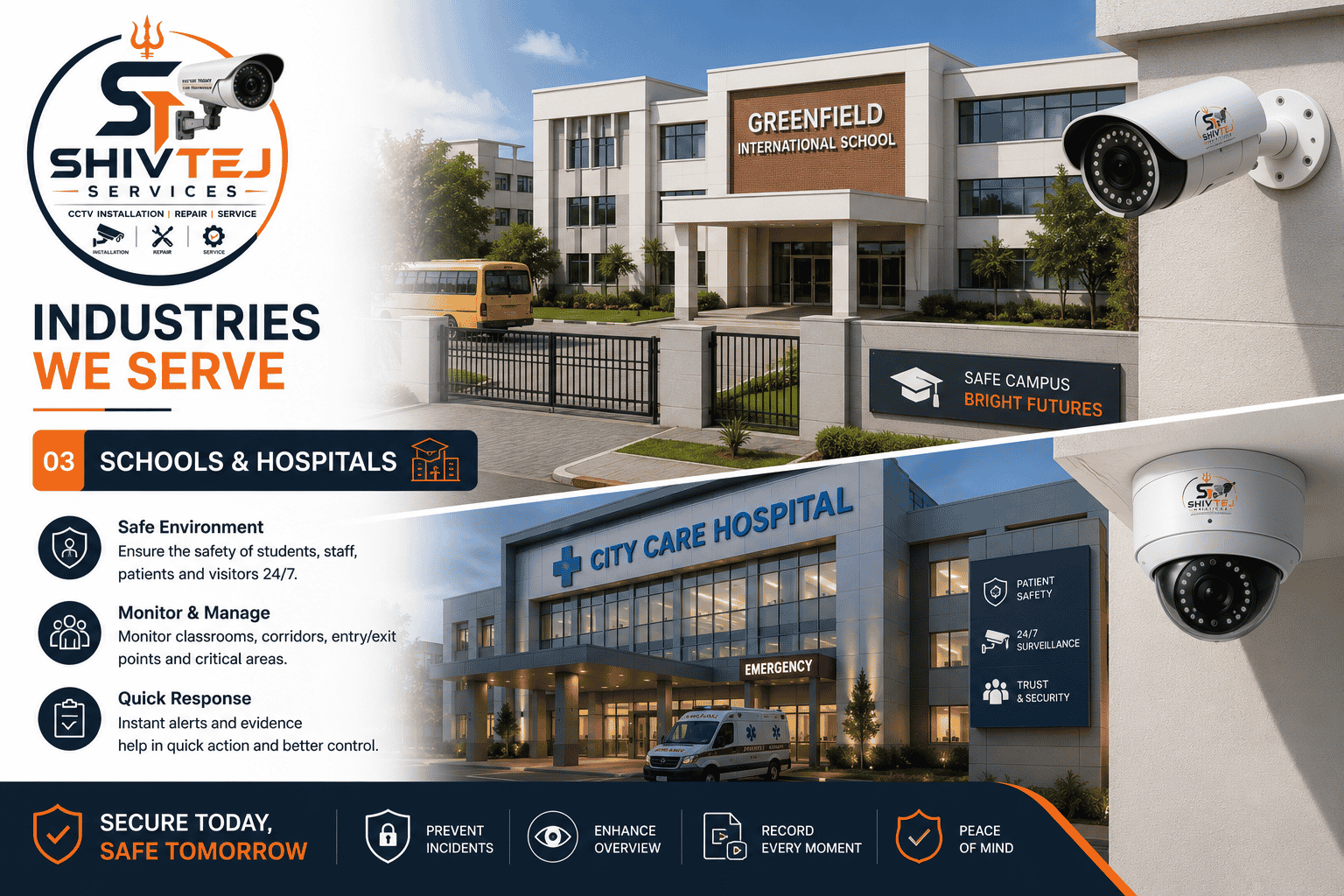
During our free site inspection, we walk the property with you, note every entry point and blind spot, and propose a camera count and placement plan before you commit to anything. This keeps the system affordable while making sure nothing important is left uncovered.

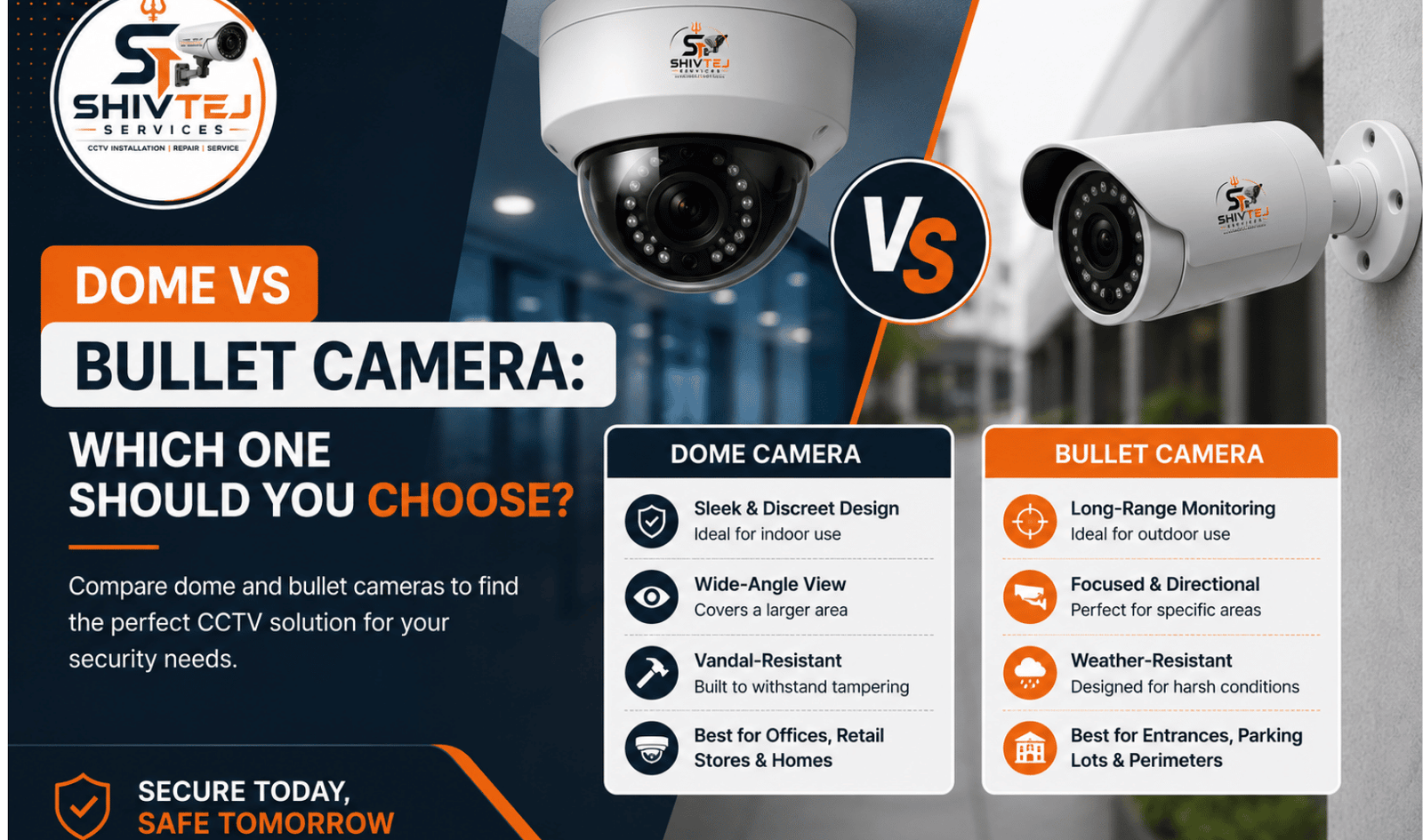
Understand the difference between dome and bullet CCTV cameras to pick the right one for your property.
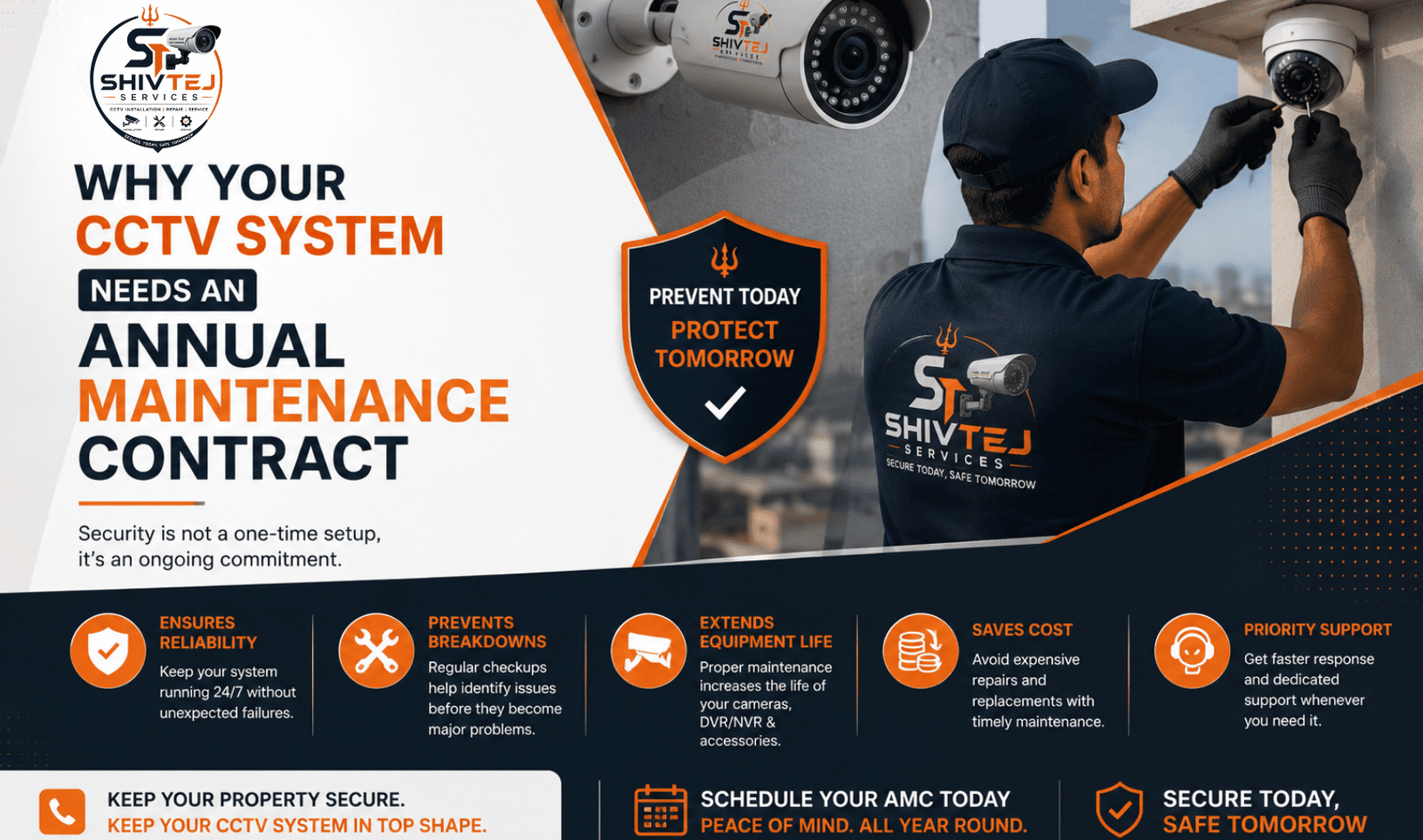
Regular inspection, cleaning and software updates keep your surveillance system reliable all year round.

Comments
Be the first to comment on this article.