AI CCTV combines cameras with video analytics that can classify events such as people, vehicles or movement inside defined zones.
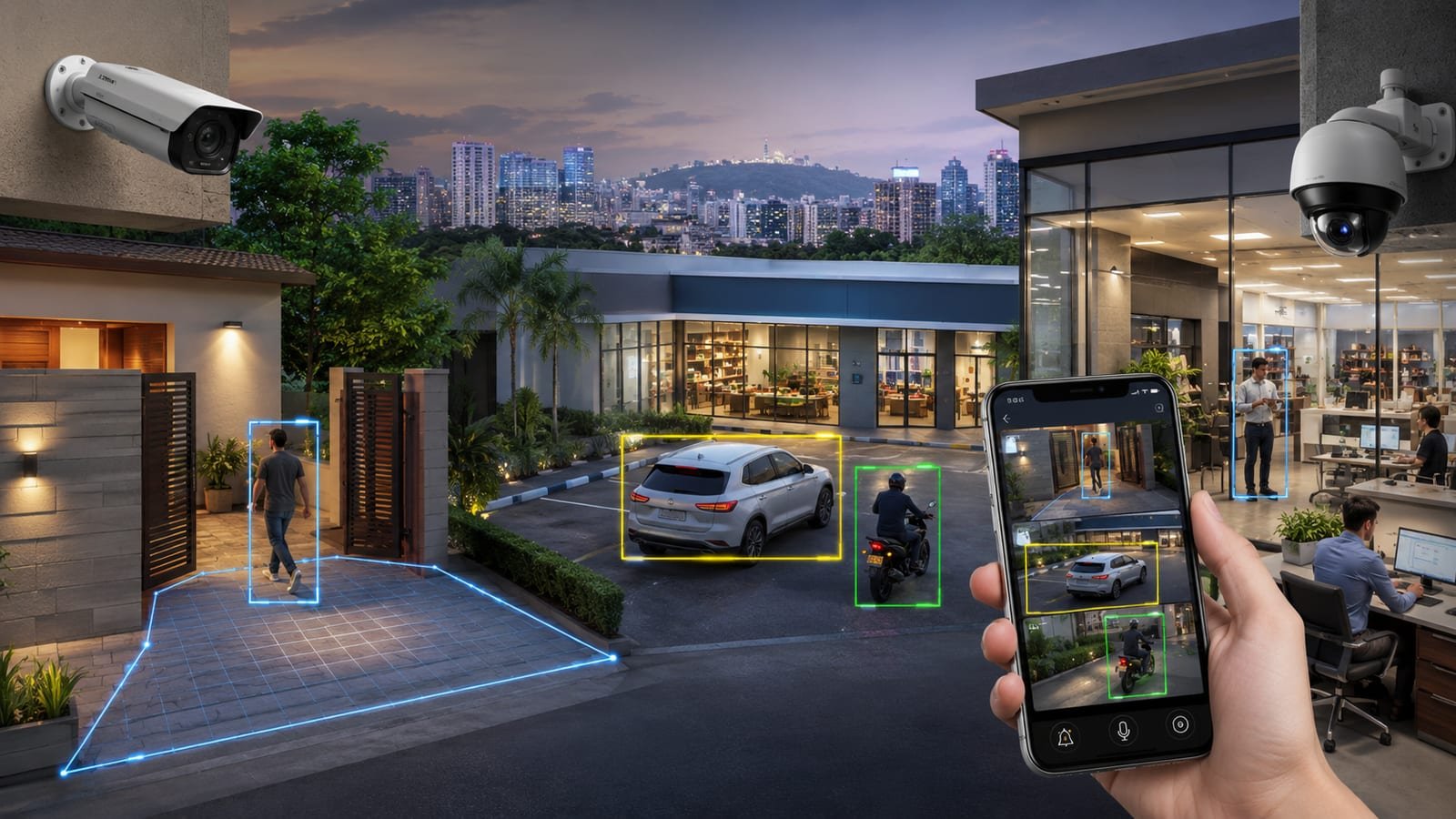
AI CCTV combines cameras with video analytics that can classify events such as people, vehicles or movement inside defined zones. The main benefit is not that the camera “thinks like a person,” but that it can filter routine footage and highlight events that deserve attention.
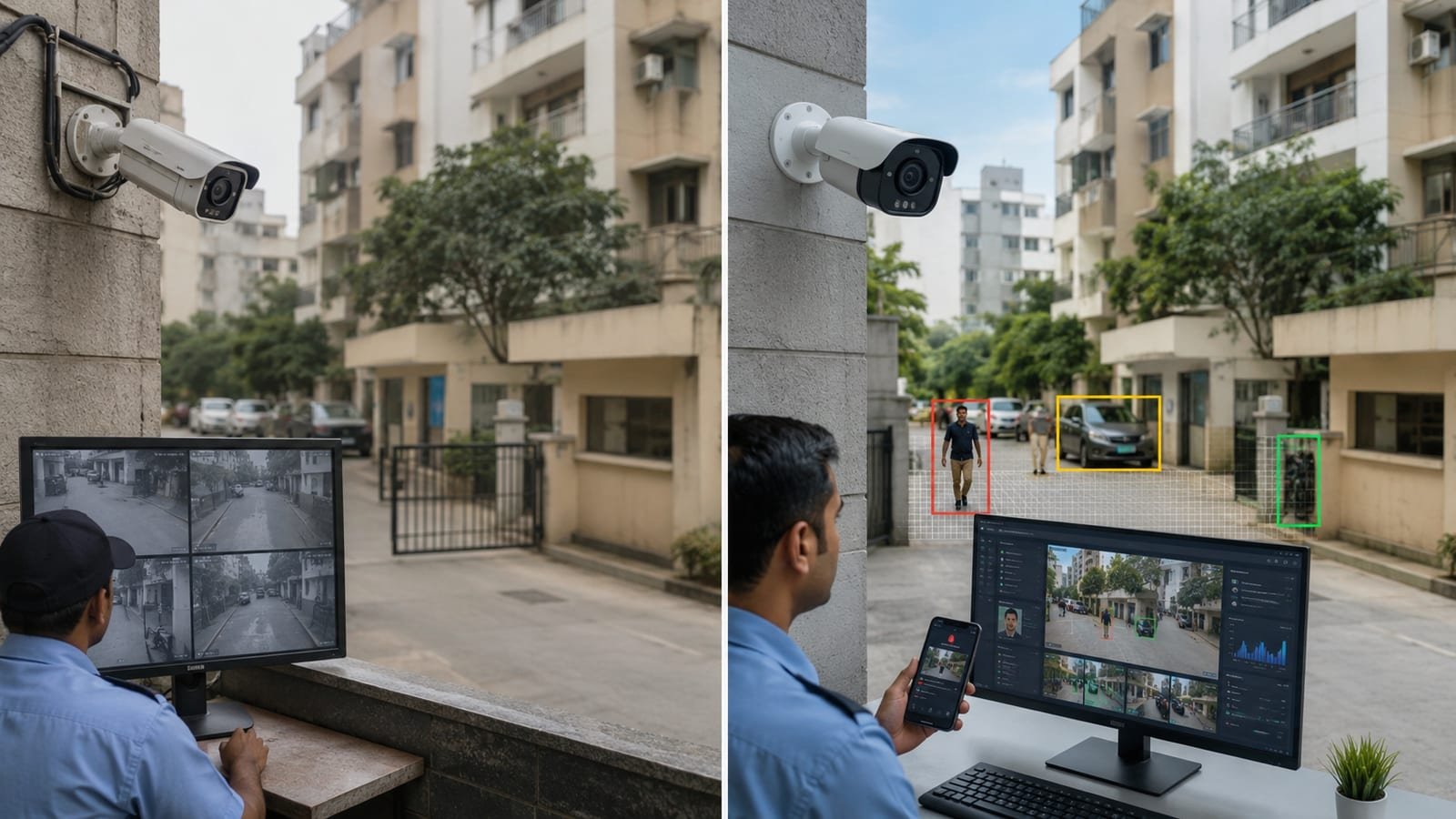
AI CCTV is a surveillance system that applies video analytics to camera footage. Instead of treating every change in the image as the same type of motion, compatible systems can classify common event types such as a person entering a zone, a vehicle appearing at a gate or movement across a virtual line.
For businesses, societies and homes in Pune and PCMC, this can reduce the amount of footage that staff need to watch manually. The system can be configured to highlight specific events and, in some setups, send a notification to an authorized user.
Traditional motion detection typically reacts when enough pixels change in the image. Rain, insects, moving trees, headlights or shadows can therefore trigger alerts. Smarter analytics attempt to classify the object or behavior before creating an event.
This does not eliminate false alerts completely. Camera angle, lighting, scene complexity and system configuration still matter. Good installation and tuning are essential.
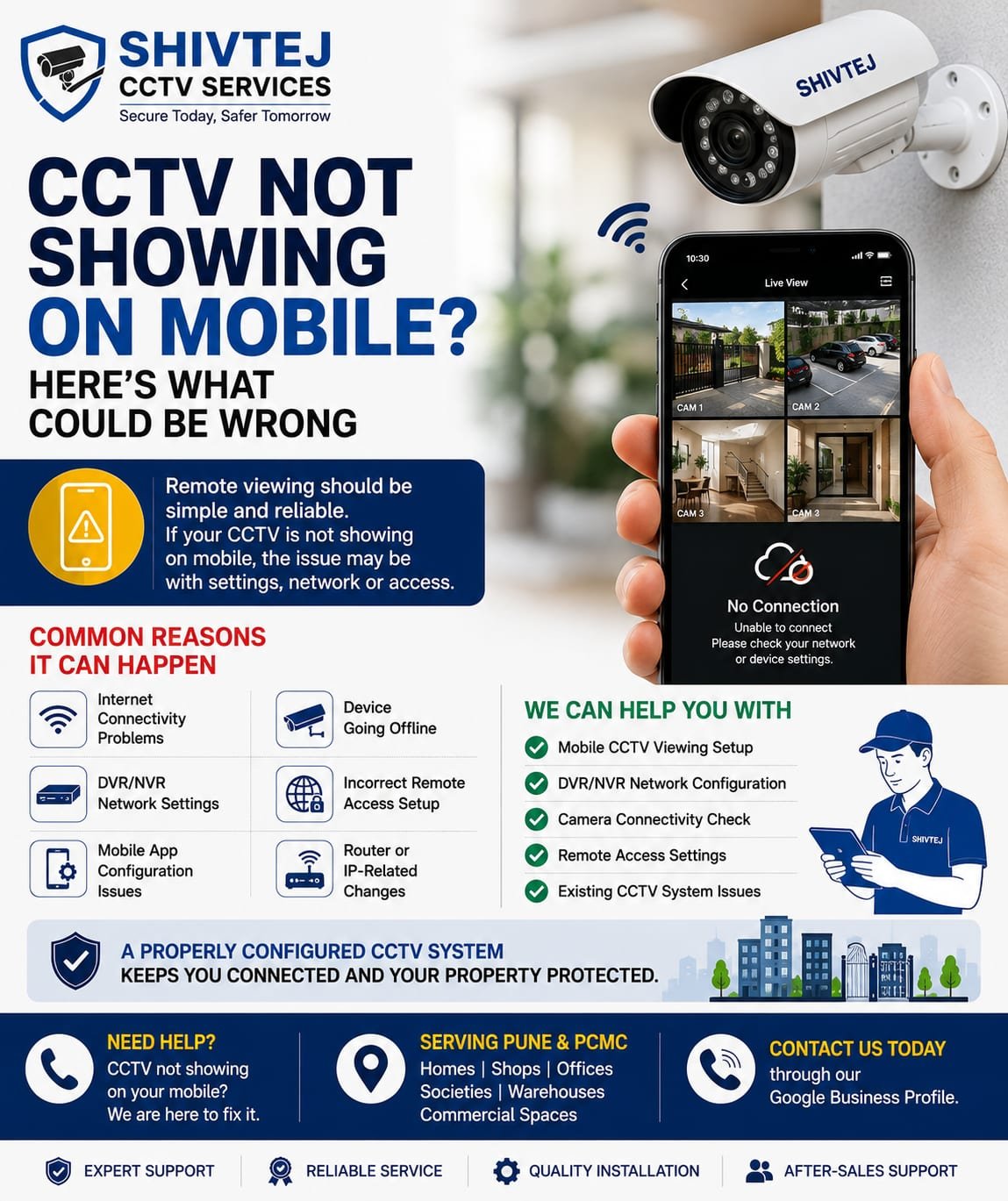
Many AI-enabled systems can send app notifications for configured events — but only when tuned around real, high-value risks.
Common features include human detection, vehicle detection, line crossing, intrusion-zone detection, loitering-style events, object appearance/disappearance and smart playback or event filtering. The exact functions depend on the camera and recorder model. Our guide to smart CCTV alerts breaks down how motion, human and intrusion detection actually differ in practice.
For a shop, the useful feature may be human detection after closing hours. For a warehouse, it may be movement in a restricted zone. For a housing society, it may be gate-side event filtering or vehicle-related monitoring.
Many modern systems can send app notifications when configured events occur. The camera or recorder usually needs a network connection, correct app setup and notification permissions.
Alerts should be tuned carefully. If every small movement generates a notification, users often start ignoring the alerts. The best setup focuses on high-value events.
AI analytics do not guarantee prevention of theft or perfect identification. They do not replace good lighting, camera placement, recording storage, access control or human response procedures. If you are weighing whether the extra analytics are worth it for your property, our comparison of AI CCTV vs traditional CCTV looks at where each approach makes more sense.
The safest way to evaluate an AI feature is to test it in the actual scene: daytime, night, rain, traffic and normal business activity.
Start with the problem you want to solve. If staff are spending too much time searching footage, event-based playback may matter more than advanced alerts. If the concern is after-hours entry, intrusion zones and phone notifications may be more useful.
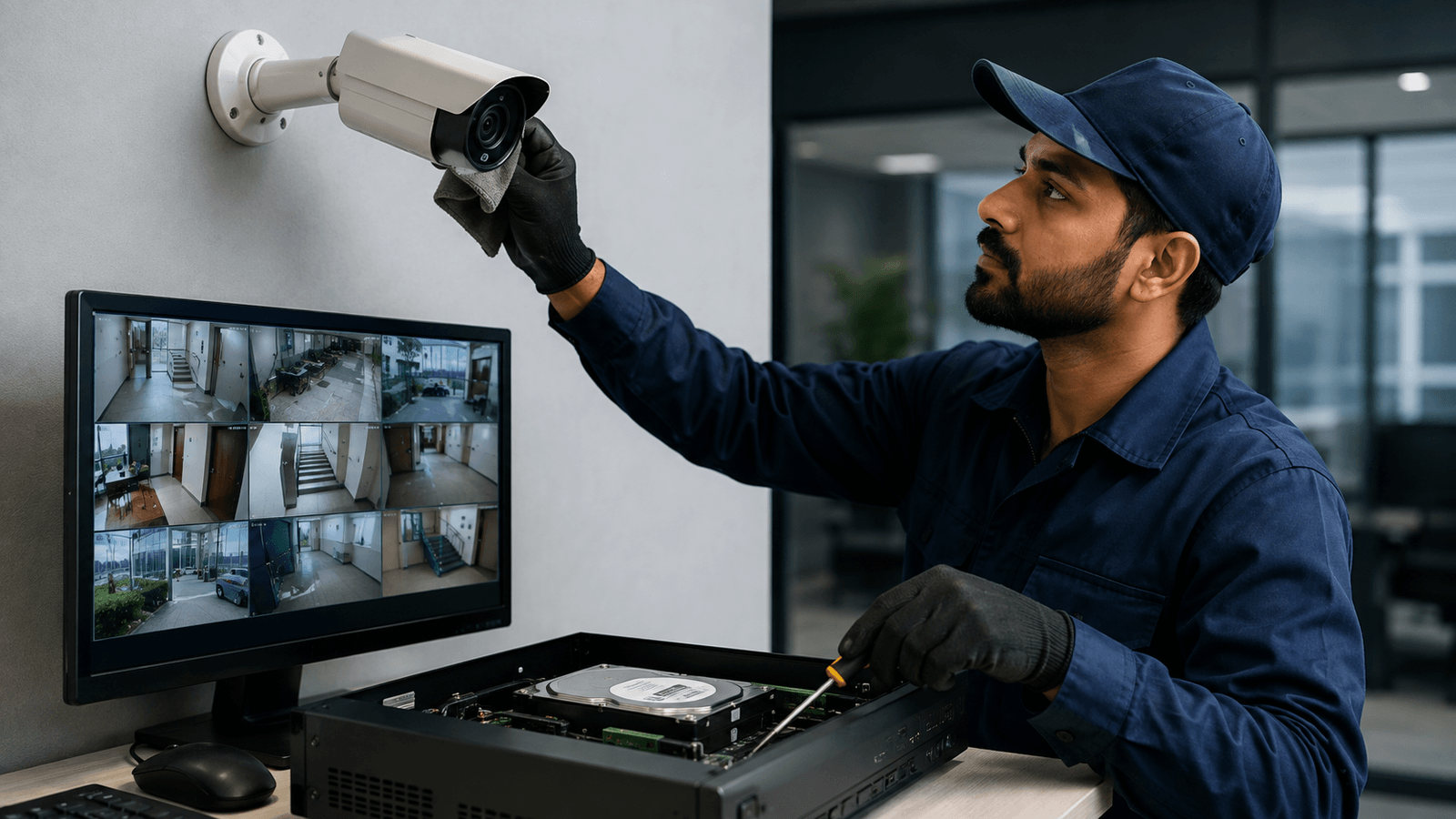
Shivtej CCTV can help assess camera placement, recorder compatibility, storage, networking and smart-analytics requirements with primary service focus in Katraj, Kondhwa, Bibwewadi and Swargate, plus wider coverage across Pune, Kharadi and PCMC. For a wider view of how AI features fit into a full business setup, see our CCTV security system guide for Pune businesses.
Shivtej CCTV supports homes, shops, offices, housing societies, warehouses and factories with CCTV installation, repair, AMC, DVR/NVR configuration, remote monitoring support, smart CCTV planning and security consultation — with primary service focus in Katraj, Kondhwa, Bibwewadi and Swargate, plus wider coverage across Pune, Kharadi and PCMC. The recommended system should be based on the property, security objective and recording requirement rather than a one-size-fits-all camera package. Call or WhatsApp +91 93093 73785 or get in touch with our team.

Comments
Be the first to comment on this article.